


Learn French in Winnipeg for immigration and use one of Canada’s best advantages. Manitoba actively recruits French-speaking newcomers through dedicated provincial pathways, lower CLB requirements, and a thriving Francophone community. You can practice your French every day, not just in a classroom.
Here’s something most immigration guides don’t mention: Manitoba’s Provincial Nominee Program gives French speakers a real edge that other provinces can’t match. Winnipeg has the largest Francophone community in Western Canada, dedicated French-language draws, and pathways that need as low as CLB 5. French can open doors here faster than in other cities.
At Learn French Canada, we’ve helped 4,500+ students across the country prepare for TEF and TCF exams. This guide breaks down exactly why Winnipeg-based immigration candidates should consider the French advantage, what CLB level you actually need, and how to get there.
Why Winnipeg Is Canada’s Best-Kept Secret for French Speakers
Most immigration candidates think of Quebec when they hear “French in Canada.” But Winnipeg has something Quebec doesn’t offer most newcomers: a provincial immigration system that specifically prioritizes French speakers. You don’t have to settle in a mostly French-speaking province to benefit.
Let’s break this down.
The Saint-Boniface Advantage
Winnipeg’s Saint-Boniface neighbourhood is the largest Francophone community in Western Canada, home to over 46,000 residents with deep French-Canadian roots dating back more than 200 years. The broader Franco-Manitoban community stretches across the city and province, with roughly 110,000 people identifying as part of Manitoba’s Francophone population.
What does this mean for you as a French learner? Real-world practice opportunities that don’t exist in most Canadian cities.

- Festival du Voyageur: Western Canada’s largest winter festival, entirely in French
- Centre culturel franco-manitobain: theatre, concerts, and art exhibits in French year-round
- Université de Saint-Boniface: the only French-language university in Western Canada
- French-language services: healthcare, government, and community services available in French throughout Saint-Boniface
- Bilingual workplaces: Manitoba’s Official Languages policy means federal and many provincial jobs require or prefer French
Living in Winnipeg while learning French gives you an immersion-like environment that cities like Toronto or Calgary simply can’t replicate outside of a classroom.
Manitoba’s Francophone Immigration Push
Manitoba has set an ambitious target: increase its Francophone population to 7% by 2035 (up from roughly 3.5% today). To reach that goal, the province is actively recruiting French-speaking immigrants through multiple pathways. This creates a genuine window of opportunity.
In practical terms, this means:
- Dedicated French-language draws through the MPNP (Manitoba Provincial Nominee Program)
- Francophone candidates are exempt from some requirements that apply to other applicants, including the in-demand occupation requirement in certain streams
- Lower CRS cut-offs for French-language Express Entry draws (March 2026 dropped to CRS 393)
- Federal support through the Francophone Community Immigration Pilot and Francophone Mobility Program
For a complete breakdown of every province’s French requirements, see our guide to Provincial Nominee Programs that reward French.
The bottom line: Manitoba wants French speakers, and they’ve built the immigration infrastructure to attract them.
Manitoba’s French-Speaking Pathway: What CLB Do You Actually Need?
Manitoba’s provincial pathways can work with lower French proficiency levels than Express Entry, depending on your stream. Express Entry typically requires CLB 7 in French to earn the maximum bonus points (up to 50 additional CRS points).
CLB Requirements by Manitoba Pathway
| Pathway | Minimum CLB | Key Benefit |
|---|---|---|
| MPNP Skilled Worker (Francophone Stream) | CLB 5 | Exempt from in-demand occupation list |
| Express Entry + French Bonus Points | CLB 7 | Up to 50 extra CRS points |
| French-Language Express Entry Draws | CLB 7 | Dedicated draws with lower CRS cut-offs |
| Francophone Mobility Program | CLB 5 | LMIA-exempt work permit for French speakers |
| Francophone Community Immigration Pilot | CLB 4 | Community-driven pathway in Francophone minority communities |
The key insight: If you’re targeting Manitoba specifically, you may not need CLB 7 at all. The MPNP Francophone stream and the Francophone Mobility Program both accept CLB 5. That’s a B1 level in French, achievable in 6 to 9 months of structured study for most adult learners.
Compare that to the 12+ months typically needed to reach CLB 7. Manitoba’s lower threshold means you could qualify for immigration months sooner than candidates targeting Ontario or federal Express Entry.
What CLB 5 and CLB 7 Actually Look Like
Not sure what these levels mean in practice? Here’s a straightforward comparison:
| Skill | CLB 5 (B1) | CLB 7 (B2) |
|---|---|---|
| Speaking | Handle everyday conversations, express opinions on familiar topics | Argue a position, handle unexpected questions, speak fluently |
| Listening | Understand main points of clear standard speech | Understand extended speech, follow complex arguments |
| Reading | Understand texts on familiar topics and routine information | Read articles on current issues, understand the writer’s attitude |
| Writing | Write simple connected text on familiar topics | Write clear, detailed text on a wide range of subjects |
For a deeper breakdown of CLB levels and what each means for your immigration goals, check out our complete guide to reaching CLB 7 in French.
TEF vs TCF: Which French Exam Should You Take in Winnipeg?
Both the TEF Canada and TCF Canada are accepted by IRCC for immigration purposes. But they’re structured very differently, and your choice matters more than most people realize.
| Feature | TEF Canada | TCF Canada |
|---|---|---|
| Speaking format | 2 role-plays (15 min total) | 3 tasks, progressive difficulty (12 min) |
| Writing format | 2 tasks: email + opinion essay (60 min) | 3 tasks: message, article, formal essay (60 min) |
| Listening | 40 questions (40 min) | 29 questions (25 min) |
| Reading | 50 questions (60 min) | 29 questions (60 min) |
| Results validity | 2 years | 2 years |
Our recommendation for Winnipeg students: Most of our students in Manitoba choose the TEF Canada. Its speaking section, two structured role-plays, feels more predictable than the TCF’s progressive-difficulty format. When you’re aiming for CLB 5 or CLB 7, knowing exactly what to expect matters.
That said, some students prefer the TCF’s shorter listening section (25 minutes vs 40). The best choice depends on your personal strengths. For a detailed side-by-side breakdown, read our TEF vs TCF comparison guide.
Where to Take the TEF or TCF in Winnipeg
TEF and TCF exam sessions are available in Winnipeg through authorized test centres. Availability varies throughout the year, so booking 2 to 3 months in advance is strongly recommended. Exam spots in smaller cities fill up faster than in Toronto or Vancouver.
If no convenient dates are available locally, many Winnipeg students book their exam in Calgary or take one of the sections online (where permitted). Your preparation matters more than your test location.
How Long Does It Take to Reach Your Target CLB from Winnipeg?
It depends on your starting point and target level. Here are real timelines based on what we see with our students across Canada:
| Starting Point | Target: CLB 5 | Target: CLB 7 |
|---|---|---|
| Complete beginner (zero French) | 6–9 months | 12 months |
| Some basics (A1–A2) | 3–5 months | 8–10 months |
| Intermediate (B1+) | Already there | 3–6 months |
These timelines assume structured study with 2 classes per week plus consistent self-study. Students who supplement their classes with French media, practice conversations, and self-study materials often progress faster.
Students in Winnipeg who engage with the local Francophone community tend to progress 15 to 20% faster than students in cities without significant French-speaking populations. Attending events at the Centre culturel franco-manitobain, reading La Liberté (Manitoba’s French-language newspaper), or simply ordering coffee in French at a Saint-Boniface café, it all adds up.
For a more detailed breakdown of study timelines and what to expect at each stage, see our guide to how long it takes to learn French for Canadian PR.
How Express Entry French Points Work for Winnipeg Candidates
Even if you’re not using Manitoba’s provincial pathways, French proficiency supercharges your Express Entry profile regardless of where you live in Canada. Here’s exactly how:
CRS Points Breakdown for French
- French as first official language (CLB 7+): Earn core human capital points based on your French CLB level, the same as English points
- French as second official language: Up to 50 additional CRS points when combined with strong English (CLB 5+ in English plus CLB 7+ in French)
- French-language draws: IRCC runs category-based draws specifically for French speakers. The March 2026 draw had a CRS cut-off of just 393 points, compared to 500+ for general draws
What most people don’t realize: you don’t have to choose between French and English for immigration. If you already have strong English (IELTS 7+) and add French at CLB 7, you get points for both languages. That combination is often the difference between receiving an ITA and waiting another year.
For the full breakdown of how French adds to your CRS score, read our guide to earning 50 Express Entry points with French.
How Our Online French Program Works for Winnipeg Students
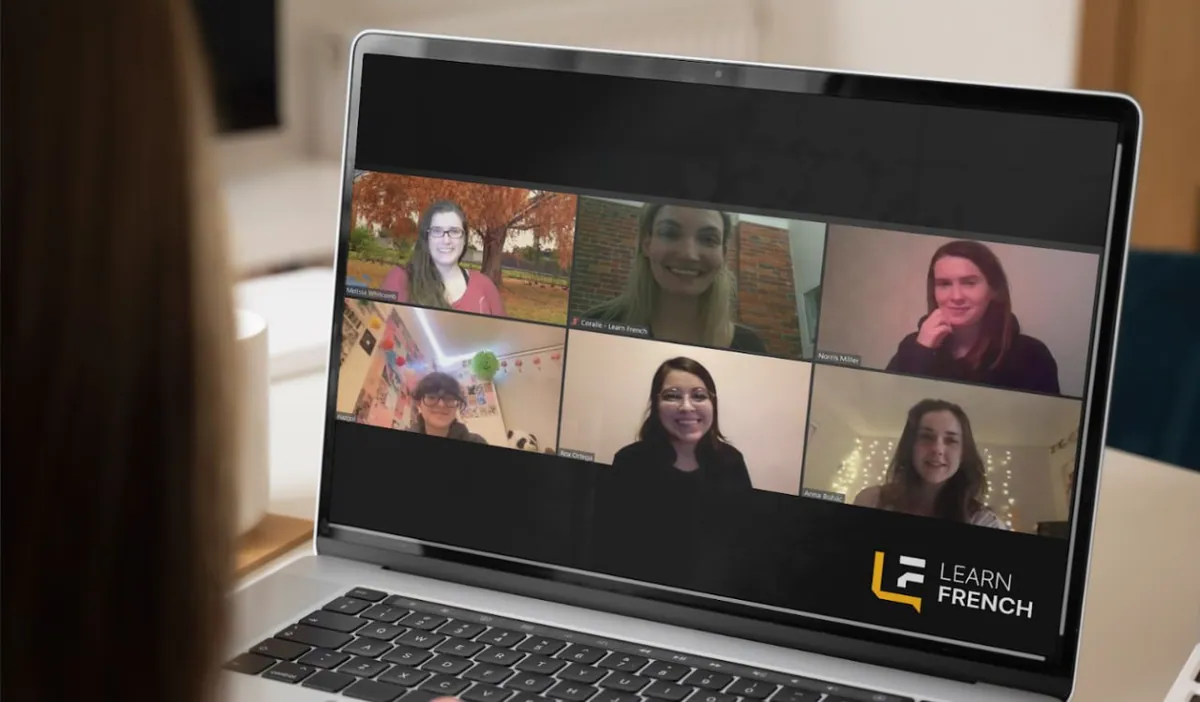
We teach students across Canada through live online classes with native French teachers from France and Quebec. Our Winnipeg students get the exact same quality instruction as students in Vancouver or Toronto.
Programs That Fit Your Timeline
Starting from zero? Our TEF for Beginners program takes you from complete beginner to CLB 7 in 12 months. It combines the French Transformation (Levels 1 to 6) with dedicated TEF/TCF exam prep, in one continuous program. Two 90-minute classes per week, max 14 students per group.
Already have some French? If you’re at B1 or higher, our TEF/TCF Prep program focuses purely on exam strategy and skill-building. Choose the 3-month track (targeting CLB 5) or the 6-month track (targeting CLB 7).
Prefer self-paced study? The Self-Study TEF Course (CA$399) gives you structured materials, practice exams, and strategy guides you can work through on your own schedule. It’s ideal for Winnipeg professionals who can’t commit to fixed class times.
What Makes Our Approach Different
- TEF/TCF-focused from day one: Every lesson is designed around what the exam actually tests, not generic French conversation
- Native French teachers from France and Quebec who understand both European and Canadian French
- Max 14 students per group: small enough for real speaking practice, large enough for dynamic discussions
- 300+ five-star reviews across Canada: students consistently achieve their target CLB scores
- Mock exams scored like the real thing, so you know exactly where you stand before exam day
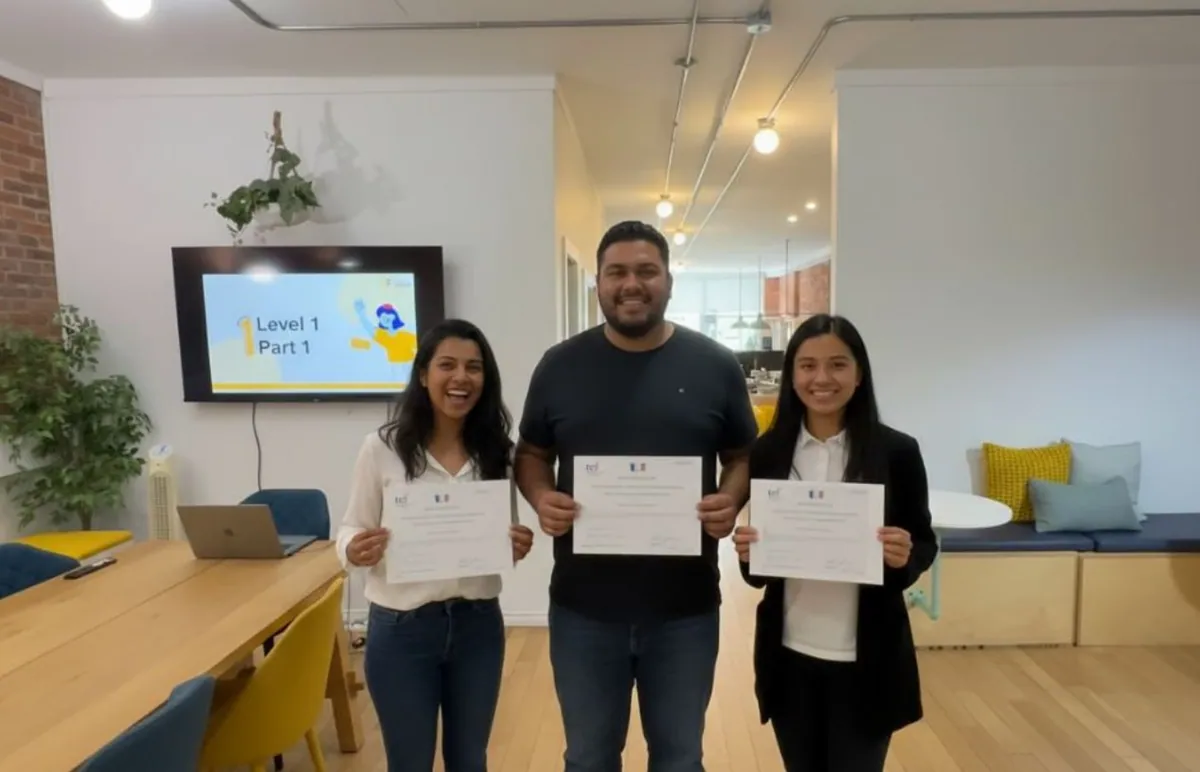
The combination of structured online classes and Winnipeg’s local Francophone resources creates something powerful: you learn the exam strategies in class, then reinforce them in real-life French conversations around Saint-Boniface.
Your Winnipeg French Immigration Action Plan
Here’s a step-by-step roadmap for Winnipeg-based immigration candidates who want to use French as their competitive advantage:
Step-by-Step Checklist
- Step 1: Assess your current level. Take our free French level test to find out where you stand. It takes 5 minutes and gives you an estimated CLB level.
- Step 2: Choose your target CLB. If you’re going through MPNP’s Francophone stream, CLB 5 is sufficient. For Express Entry French bonus points, aim for CLB 7.
- Step 3: Pick the right program. Complete beginners → 12-month TEF for Beginners. Intermediate learners → 3 or 6-month TEF/TCF Prep. Budget-conscious → Self-Study Course.
- Step 4: Book your exam early. TEF/TCF spots in Winnipeg fill quickly. Register 2 to 3 months before your target date.
- Step 5: Immerse locally. Join Saint-Boniface community events, follow Franco-Manitoban social media, and read La Liberté. These steps speed up your progress a lot.
- Step 6: Take the exam and submit your scores. Results are typically available within 2 to 4 weeks and are valid for 2 years.