

If you’re preparing French for Canadian immigration, the first decision you’ll face is: TEF vs TCF. Which exam should you take? Both are accepted by IRCC for Express Entry, Provincial Nominee Programs, and citizenship. Both test the same four skills. And both can earn you up to 50 bonus CRS points.
So what’s actually different? More than you’d think. The formats, timing, speaking setup, and scoring systems are all different, and choosing the right one for your strengths can mean the difference between CLB 6 and CLB 7. If you’re familiar with IELTS, CLB 7 in French is roughly equivalent to IELTS 6.0. It’s achievable, but you need to take it through either the TEF Canada (created by CCI Paris) or the TCF Canada (created by France Éducation International).
This guide compares every detail side by side, based on what our 4,500+ students and 14 native French teachers have learned preparing candidates for both exams.
TEF vs TCF at a Glance: Full Comparison
Let’s start with the numbers. The TEF Canada has more questions and slightly more time, while the TCF Canada is shorter but uses progressive difficulty.
| Feature | TEF Canada | TCF Canada |
|---|---|---|
| Creator | CCI Paris Île-de-France | France Éducation International |
| Listening | 60 questions, 40 min | 39 questions, 35 min |
| Reading | 50 questions, 60 min | 39 questions, 60 min |
| Speaking | 2 sections, ~15 min (with examiner) | 3 tasks, ~12 min (face-to-face with examiner) |
| Writing | 2 tasks, 60 min (handwritten) | 3 tasks, 60 min (handwritten) |
| Prep time (speaking) | 1 minute per section | No prep time |
| Difficulty progression | Mixed difficulty throughout | Easy → Hard (progressive) |
| Scoring | Points scale (0-360/300/450) | Points scale (0-699) + level (A1-C2) |
| Results | ~3 weeks | ~4 weeks |
| Validity | 2 years | 2 years |
| Cost | ~$400-450 CAD | ~$300-380 CAD |
| Retake wait | 60 days | 30 days |
| Negative marking | No | No |
Both exams are equally accepted by IRCC for all immigration programs. There is no advantage to choosing one over the other from an immigration perspective. The choice comes down to format preference and which plays to your strengths.
What Does Each Exam Actually Feel Like?
The comparison table tells you the numbers. But what really matters is how each exam feels when you’re sitting in that chair. Here’s the breakdown our teachers share with every student.
Listening: TEF’s 4 Sections vs TCF’s 3 Levels
The TEF splits listening into 4 section types: dialogues, short messages, interviews, and sound recognition, with 60 questions in 40 minutes. You manage your own time, which means you can skip tricky questions and come back.
The TCF takes a different approach: 39 questions in 35 minutes that get progressively harder, from A1-level simple announcements to C1-level academic lectures. The first 13 questions are easy confidence-builders. Questions 14-26 are where CLB 7 is won or lost. Questions 27-39 are designed for C1/C2, but you don’t need to ace them.
Who prefers what: Students who like structure and self-paced work lean TEF. Students who prefer building momentum from easy to hard lean TCF.
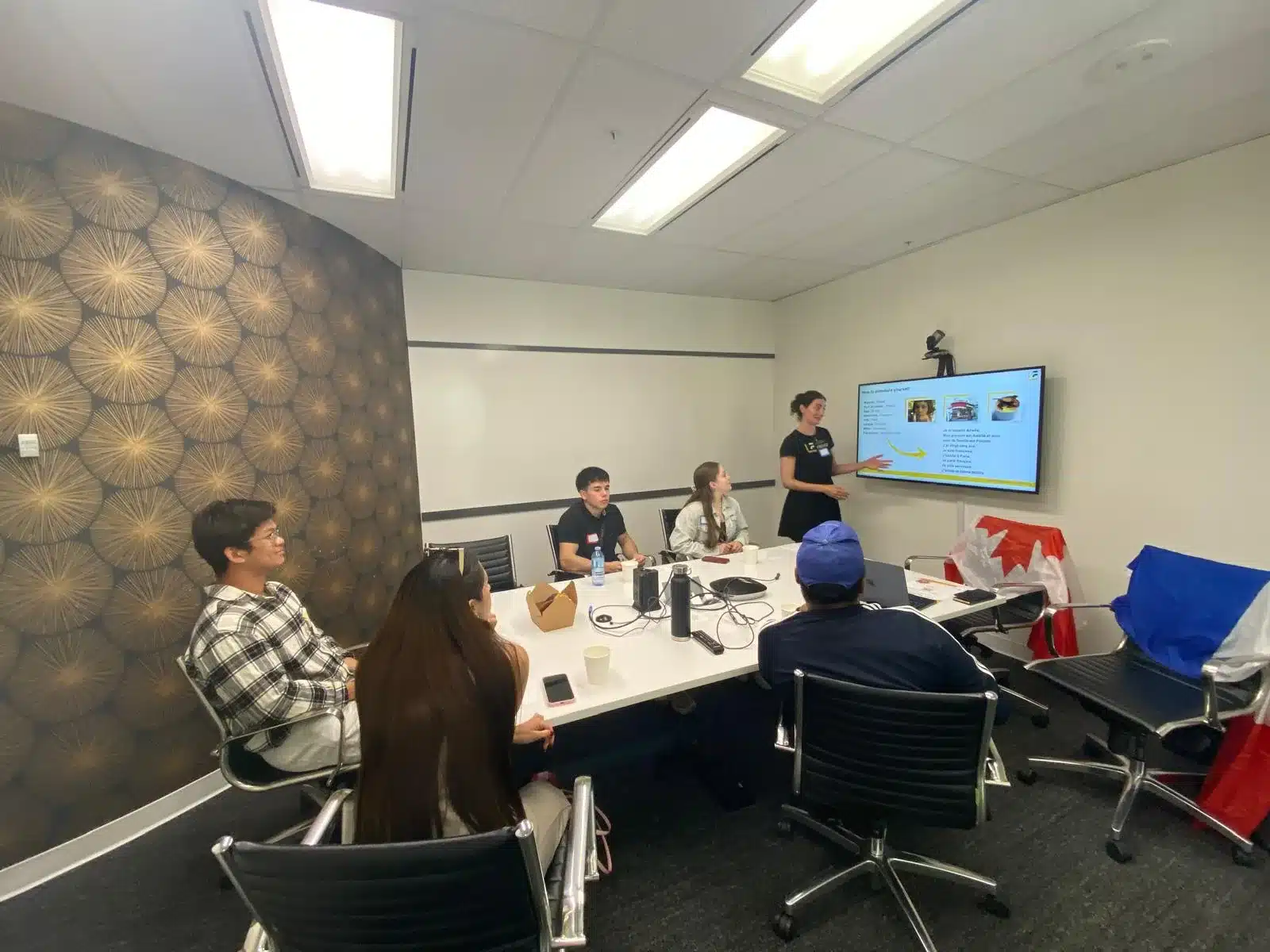
Reading: Same Time, Different Rhythm
Both exams give you 60 minutes for reading. The TEF has 50 questions (more questions, faster pace); the TCF has 39 (fewer questions, but they get progressively harder).
The TEF reading mixes difficulty levels throughout. You might face a hard question early, then an easy one. The TCF starts simple (short notices, ads) and builds to complex opinion pieces and academic texts. For TCF, the strategy is to bank easy points fast, then spend your remaining time on the harder questions.
Writing: 2 Tasks vs 3 Tasks
Both exams are handwritten on paper: no computer, no spellcheck, no ability to edit or rearrange text. That surprises many students.
The TEF gives you 2 writing tasks: Section A (~80 words, summarize/continue an article) and Section B (~200 words, formal argumentative letter). The TCF gives you 3 tasks that build in complexity: Task 1 (~60 words, short message), Task 2 (~120 words, formal letter), and Task 3 (~180 words, argumentative essay).
The key difference: TEF jumps straight into formal writing. TCF lets you warm up with a simple task first. If you’re the type who needs a warm-up to get your French brain working, the TCF’s progressive format may suit you better.
Speaking: The Biggest Difference Between TEF and TCF
This is where the two exams diverge most, and it’s often the deciding factor for students.
TEF Speaking: 2 sections, ~15 minutes, with an examiner. You get 1 minute of preparation time before each section. Section A is a role-play where you gather information (asking questions). Section B is an argumentative debate where you defend your opinion and handle pushback.
TCF Speaking: 3 tasks, ~12 minutes, face-to-face with an examiner. Zero preparation time. Task 1 is a warm-up interview (personal questions). Task 2 is an interactive scenario (negotiation/problem-solving). Task 3 is expressing and defending an opinion.
Here’s what each looks like in practice:
TEF Section B prompt:“You discovered an outdoor fitness class. Present it to your friend and convince them to join.”
→ You get 1 minute to organize your thoughts, then speak for ~5 minutes.TCF Task 3 prompt:“Pensez-vous que le télétravail devrait devenir la norme?”
→ No prep time. You start speaking immediately and the examiner will challenge your position.
The honest assessment from our teachers: Students who tend to freeze under surprise pressure do better on the TEF. That 1 minute of prep time makes a real difference. Students who are naturally conversational and think well on their feet often prefer the TCF’s interactive format. The TCF also starts with easy personal questions, so you’re already warmed up before the hard opinion task.

What CLB 7 Score Do You Need on Each Exam?
CLB 7 is the score that gives you the full bilingualism bonus for Express Entry, up to 50 extra CRS points. Here’s exactly what you need on each exam, broken down by skill:
| Skill | TEF Canada (CLB 7) | TCF Canada (CLB 7) |
|---|---|---|
| Listening | 249–279 / 360 | 458–502 / 699 |
| Reading | 233–247 / 300 | 453–498 / 699 |
| Speaking | 310–348 / 450 | 10–11 / 20 |
| Writing | 310–348 / 450 | 10–11 / 20 |
Critical point: you must hit CLB 7 in ALL four skills. If you score CLB 9 in listening but CLB 6 in writing, your overall level counts as CLB 6 for immigration. Your weakest skill determines your score. For a full breakdown of what CLB 7 means for your PR application, read our complete CLB 7 guide.
Which Exam Suits Your Strengths?
After preparing thousands of students for both exams, our teachers have a simple framework for recommending one over the other:
Choose TEF If You…
- Need preparation time before speaking: TEF gives you 1 minute to organize your thoughts
- Prefer structured, predictable formats: TEF sections are clearly defined with consistent question types
- Are stronger at formal argumentation: TEF Section B is a structured debate, not a conversation
- Want more questions to prove yourself: more questions means more chances to earn points in listening/reading
Choose TCF If You…
- Think well on your feet: TCF speaking has zero prep time but starts with easy warm-up questions
- Prefer progressive difficulty: start with confidence-building easy questions, build to harder ones
- Are more conversational than formal: TCF speaking feels like a real conversation, not a performance
- Want a shorter retake window: TCF allows retakes after 30 days vs. TEF’s 60 days
- Have a tighter budget: TCF is typically $50-70 cheaper than TEF
What most people don’t realize: the preparation is identical for both exams. The underlying French skills (grammar, vocabulary, listening comprehension, argumentative writing) are the same. The difference is purely format. Our TEF/TCF Prep course in Toronto and Calgary prepares you for both formats simultaneously so you can decide later, even up to a few weeks before your test date.
Cost, Availability, and Test Centers Across Canada
The TEF Canada costs approximately $400-450 CAD, while the TCF Canada runs $300-380 CAD, depending on the test center. Both are offered at authorized centers in major Canadian cities including Vancouver, Toronto, Calgary, Montreal, Ottawa, and Edmonton.
A few practical differences that matter:
- Test frequency: TCF sessions tend to be more frequent in larger cities. TEF sessions may have fewer dates, so book 2-3 months in advance.
- Retake policy: TCF allows a retake after 30 days. TEF requires 60 days between attempts. If you’re on a tight immigration timeline, the TCF gives you a faster second chance.
- Results speed: TEF results typically arrive in ~3 weeks. TCF can take ~4 weeks. Factor this into your immigration application timeline.
- All four sections mandatory: On both exams, you must complete listening, reading, speaking, and writing. You can’t skip a section or submit partial results to IRCC.
Pro tip from our students: Check test center availability in your city before committing. Some centers only offer TEF, others only TCF, and some offer both. If only one exam is available near you, that simplifies your decision.
How Our Students Decide (And How We Help)
Florian joined our online TEF/TCF Prep program from Calgary with B1-level French and a clear goal: CLB 7 for Express Entry. He wasn’t sure which exam to take, so our teachers had him do mock tests in both formats during his first month. The result? His TEF listening scores were consistently higher (he liked managing his own time), but his TCF speaking scores were better (he’s a natural conversationalist who thrives without prep time).
In the end, Florian chose the TCF. His speaking was his weakest skill, and the TCF format gave him an edge where it mattered most. He passed CLB 7 on his first attempt.
“I did the online program from Calgary and it was just as effective as being in person. The small group format meant I got plenty of speaking practice.” — Florian, Calgary
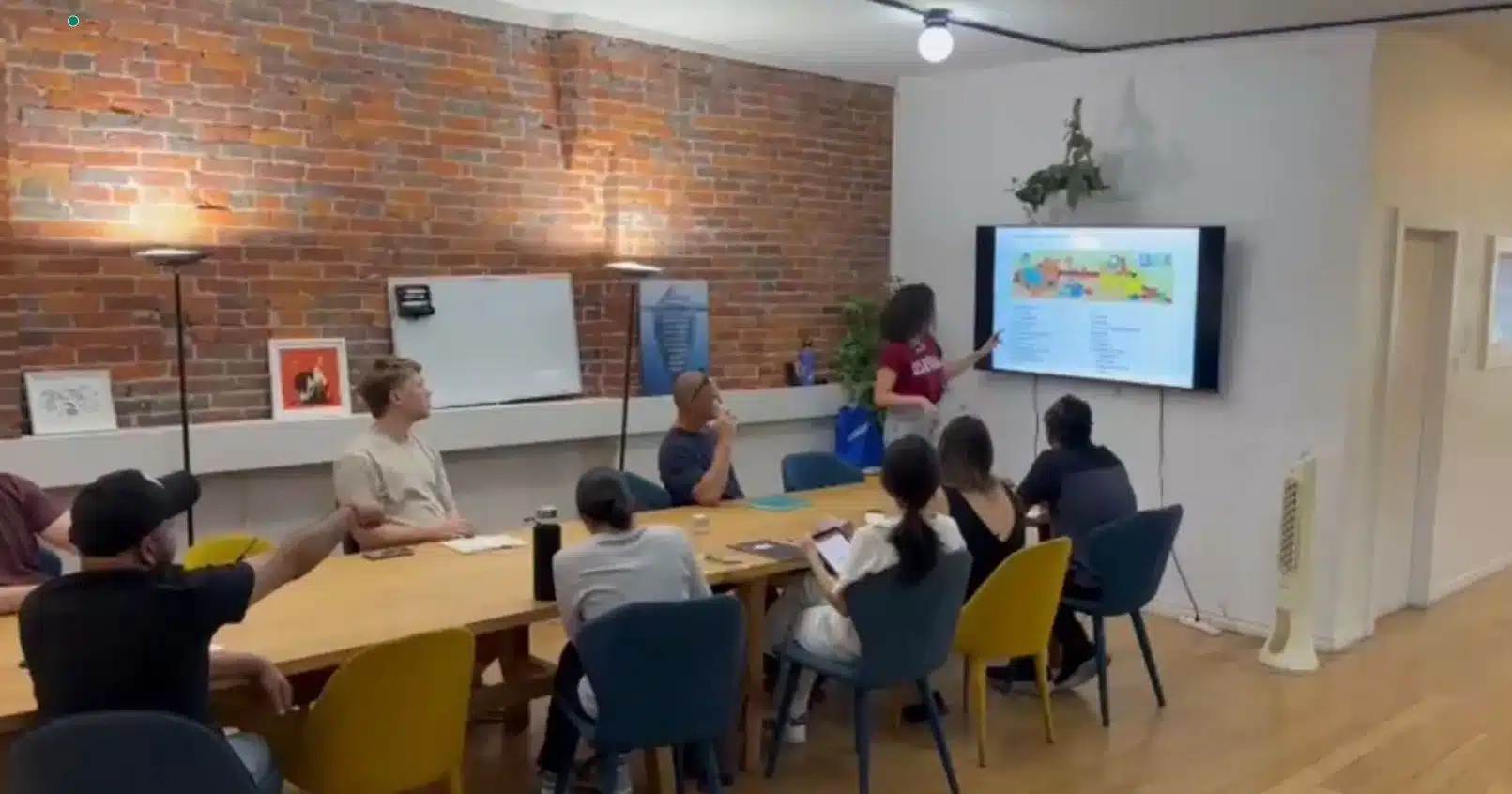
This is exactly how we recommend students decide: try both formats in practice, then choose the one where your weakest skill performs best. Our prep program covers both TEF and TCF strategies because the core French skills are identical. Only the exam technique differs.
With 300+ five-star reviews across Canada and groups of max 14 students, every student gets enough speaking practice and personalized feedback to feel confident on either exam. Curious about how long the full preparation takes? Most students need 3-6 months from B1 level, or 12 months from zero.
Want to see what both exams look like? Try our free TCF sample test: practice questions for all four sections with answer keys.